Material and Safety Data Sheet
References
J.Mol.Biol. (2010) 400 p.589

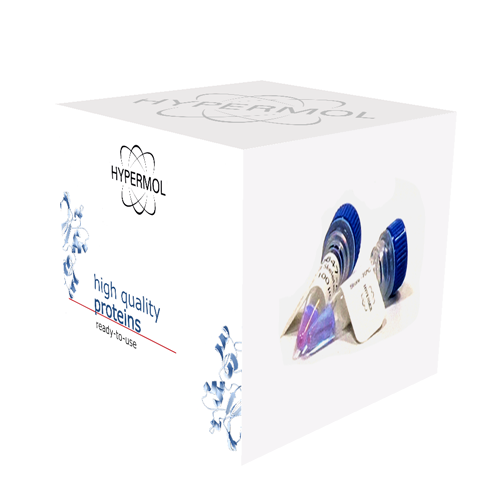
Calmodulin
(Actin Binding Protein)
Cat. #: 8357-01
.....................................................................................................................................................................................................................................................................................................................................................................................................................................................
Description
|
|
|
|
Protein |
Calmodulin ( Phosphodiesterase 3'-5'-Cyclic Nucleotide Activator) |
|
Origin |
bovine |
|
Molecular mass |
~16.6 kDa |
|
Protein description |
Calmodulin has a dumb-bell-structure. Two calcium binding EF hand loops, antiparallel β-sheet and three α-helices comprise the lobes, connected by a central helix. Calmodulin is able to bind four calcium molecules in a cooperative interaction manner. CaM is expressed in many cell types and can have different subcellular locations, including the cytoplasm, within organelles, or associated with the plasma or organelle membranes. Many of the proteins that CaM binds are unable to bind calcium themselves, and as such use CaM as a calcium sensor and signal transducer. CaM can also make use of the calcium stores in the endoplasmic reticulum, and the sarcoplasmic reticulum. CaM undergoes a conformational change upon binding to calcium, which enables it to bind to specific proteins for a specific response. |
|
Actin interaction |
Indirect via calmodulin binding proteins |
Properties
|
|
|
|
Form |
Lyophilized, ready-to-use. |
|
Quantity per unit |
2x50µg |
|
Buffer |
20mM Hepes pH 7.4, 0.1 mM CaCl2, 0.2mM DTT and 3% disaccharides, when reconstituted in 50µl ultrapure water. |
|
Purity & Activity |
Purity: >98% by scanning densitometry from Coomassie G-250 stained SDS-Gels. |
|
Purification notes |
Calmodulin was finally purified by gel filtration chromatography on Superdex 200 . |
|
Extinction Coefficient |
0.2 |
|
Storage instructions |
Caldesmon is stored at –70°C upon arrival will be stable in performance for at least 6 months from the date of purchase. The solubilized protein is kept on ice and should be stored at -20°C in glycerol or CryoProtect (Cat.#: 6011-01). Avoid repeated freeze / thaw cycles. |
|
Shipping conditions |
At ambient temperature. Upon delivery store at -70°C. |
|
Remarks |
|
|
CAS no. |
|
Further Information
 Product DataSheet
 Protein Sequence on NCBIMaterial and Safety Data Sheet
References